



AI as a Catalyst for Inclusive Communication and Learning
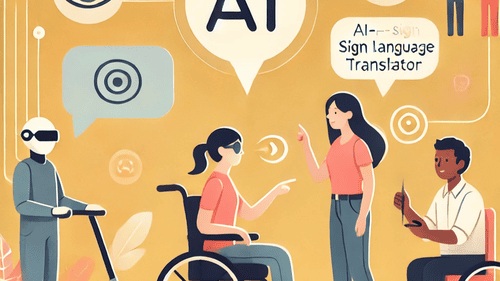
Artificial intelligence (AI) is rapidly transforming how individuals access information, communicate across languages, engage in learning, and participate in social and economic life. As tools become more sophisticated, AI’s promise to support accessibility and inclusion has moved from theoretical potential to real-world impact. Whether through real-time language translation, adaptive learning platforms for diverse educational needs, or assistive technologies that enable individuals with disabilities to engage meaningfully with their environments, AI is shaping a more inclusive world.
Breaking Down Language Barriers with AI
One of the most visible and immediately impactful areas where AI is making a difference is in overcoming language barriers. Language differences have historically restricted access to critical services, hindered participation in education, and limited employment and civic engagement for multilingual and non-native speakers. AI-driven language technologies are addressing these challenges at scale, empowering individuals to communicate effectively across linguistic divides.
Real-time translation tools powered by neural networks now enable near-instantaneous conversion of spoken and written language. These systems go beyond simple dictionary lookups by analyzing context, syntax, and idiomatic usage, making cross-language communication smoother and more natural. This capability is especially valuable in multilingual communities and public service contexts where traditional interpreter services are limited or unavailable. In response to growing diversity among non-native speakers in municipal settings, government and community organizations are increasingly turning to real-time AI translation to make public meetings, health information, and civic engagement more accessible to all residents, even amid budget and resource constraints. [1]
AI is also being applied to support languages and communities that are rarely represented in mainstream technologies. For example, Kenyan innovators have developed datasets and systems aimed at translating between English and Kenyan Sign Language (KSL), directly supporting deaf learners and educators. The AI-assisted dataset includes thousands of signed videos mapped to English sentences, laying the foundation for tools that can bridge communication between hearing and deaf communities in Kenya. Parallel work in Greece combines lip-reading with sign language accessibility to enable more comprehensive communication tools for deaf and hard-of-hearing individuals, illustrating how multimodal AI can integrate visual, textual, and auditory signals for improved accessibility.
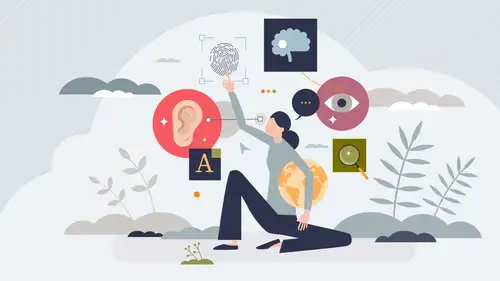
These innovations demonstrate a broader trend: AI is no longer limited to the dominant global languages. By focusing on local languages and communication methods, including sign languages, AI tools are helping to ensure that the benefits of technology reach communities that have previously been overlooked. Beyond translation alone, AI systems increasingly incorporate emotional and contextual sensitivity, recognizing that effective communication involves more than just converting words—it requires interpreting intent, tone, and cultural nuance.
At the same time, accessibility-focused applications such as AI-enhanced apps that assist blind and visually impaired users describe visual content through text and voice, expanding the ability to interact independently with digital and physical environments. These tools, which integrate large language models with assistive features, give users the capacity to interpret images, navigate new spaces, and access visual media—bridging gaps that traditional interfaces could not address.
Collectively, these examples reflect how AI is reducing linguistic barriers not only between different spoken languages but also between diverse modes of communication, enabling greater participation in education, employment, and civic life.
AI Enhancing Education and Support for Underserved Populations
Beyond language, AI’s transformative potential in education is particularly significant for underserved communities and learners with diverse needs. Traditional educational resources are often unevenly distributed, with underserved regions facing shortages of qualified teachers, limited access to instructional materials, and challenges in accommodating varied learning styles. AI-driven educational platforms aim to bridge these gaps by providing personalized instruction, adaptive learning pathways, and accessibility features that respond to individual needs.
AI systems can tailor instruction to match a learner’s current understanding, offering customized assignments, instant feedback, and targeted support where needed most. This adaptive approach helps learners advance at their own pace and reduces the barriers that standardized, one-size-fits-all models create. In regions with limited infrastructure, lightweight AI tools that operate offline or on low-bandwidth connections can deliver educational content where traditional digital education platforms cannot reach, helping to narrow the digital divide. Research into small language models running on low-power devices suggests such tools can support advanced subjects like physics and photonics in resource-constrained educational environments by acting as virtual tutors.
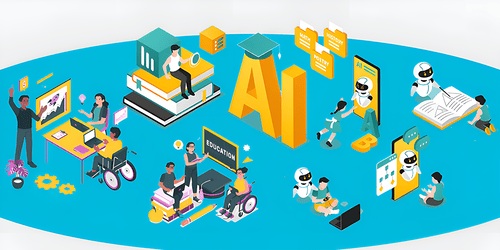
In inclusive education specifically, a growing body of research shows that AI tools facilitate learning for students with disabilities by offering tailored instructional strategies and assistive technologies such as speech recognition, text-to-speech, and adaptive interfaces that respond to diverse cognitive, auditory, visual, and motor needs. These systems help educators provide differentiated instruction that accommodates learners’ unique abilities, fostering engagement and participation. Real-time captioning and subtitling, supported by AI, help students who are deaf or hard of hearing follow lectures and discussions more effectively, while automated translation and language support tools assist multilingual learners in classrooms with diverse linguistic backgrounds. [2]
AI also enhances inclusive practices by supporting educators’ workload and informing policy decision-making. Data analytics powered by AI provides insights into student performance, enrollment patterns, and learning gaps, enabling administrators to allocate resources efficiently and design evidence-based interventions that address inequities. AI platforms can also automate administrative tasks, allowing teachers to focus more on direct student engagement and instructional quality.
Alongside instructional innovations, access to assistive communication applications like augmentative and alternative communication (AAC) tools broadens participation for individuals with speech and language impairments. Applications that combine predictive text, speech output, and customizable voice options allow users with conditions such as nonverbal autism or aphasia to express themselves more effectively and engage with educational content and community life.
While the benefits of AI are promising, research also highlights challenges that must be addressed to ensure equitable impact. In many underserved regions, limited digital infrastructure, lack of reliable internet, and scarce technical support restrict the deployment and sustained use of educational AI tools, underscoring the need for investment in infrastructure and training. Teacher preparedness and digital literacy are essential for integrating AI effectively into inclusive education, as insufficient training can limit the technology’s impact and reinforce disparities instead of reducing them. [4] Moreover, ethical design that incorporates lived experiences of learners from diverse backgrounds is crucial to prevent unintended biases and exclusionary outcomes. [5]
By aligning AI development with principles of equity, accessibility, and universal design, educational technologies can support learners regardless of background, ability, or location, helping to democratize access to knowledge and skills on a global scale.
Sources:
[1]: https://www.prnewswire.com/news-releases/ai-emerging-as-critical-tool-to-bridge-language-access-gap-302467717.html
[2]: https://link.springer.com/article/10.1007/s43681-025-00824-3
[3]: https://adam.ai/blog/inclusive-education-policies
[4]: https://rsisinternational.org/journals/ijriss/articles/evaluating-ai-powered-assistive-technologies-in-inclusive-education-a-systematic-review-of-literature-on-efficacy-and-accessibility
[5]: https://aieou.web.ox.ac.uk/article/ai-inclusion-challenging-design-educational-ai-through-equity-disability-perspectives
References:
https://www.nature.com/articles/s41598-024-59237-7
https://www.mdpi.com/2227-7102/15/9/1125
https://www.prnewswire.com/news-releases/ai-emerging-as-critical-tool-to-bridge-language-access-gap-302467717.html