


How AI Is Transforming Historical and Cultural Reconstruction?
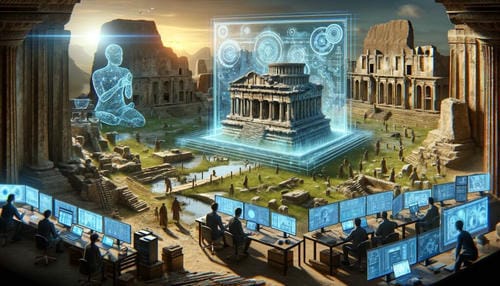
Artificial intelligence (AI) is rapidly reshaping how researchers, historians, and cultural institutions approach the reconstruction of lost languages, artifacts, and heritage sites. Far from being a simple buzzword, AI encompasses a range of sophisticated tools that extend human capabilities—enabling us to interpret damaged texts, visualize ancient cities, and reconstruct objects long since fragmented or destroyed. These developments carry profound implications for historical research, cultural preservation, and public engagement. However, as AI’s role expands in these fields, debates intensify about accuracy, ethics, and the fine line between faithful restoration and speculative reconstruction.
AI Tools in Language and Artifact Reconstruction
One of the most striking areas in which AI is influencing historical reconstruction is the recovery of lost or damaged texts and languages. Historically, epigraphers and linguists laboriously restore fragmented inscriptions and manuscripts by hand. Today, machine learning models such as Pythia are designed to take damaged text inputs and produce hypothesized restorations of ancient inscriptions, assisting scholars by filling in missing characters or passages that would otherwise remain illegible. This type of AI operates at both the character and word level, analyzing context to infer plausible completions that aid philologists, papyrologists, and codicologists in their work.
Beyond simple character restoration, specialized AI systems are being developed to decode ancient linguistic structures and aid in translation. For example, language-specific models trained on extensive corpora of historical texts are enabling deeper semantic understanding of classical languages, helping communities preserve linguistic heritage. In some cases, AI accelerates the deciphering of scripts that have hampered historians for decades, much like cutting-edge OCR and natural language processing have already begun digitizing and transcribing handwritten manuscripts and multilingual archives for broader access. [1]
AI’s application also extends into the physical reconstruction of artifacts and objects. Traditional reconstruction—whether of pottery, figures, or monumental sculptures—relies on manual pattern recognition and artisanal replication. Emerging AI systems can analyze fragmentary shards and predict how they fit together far more quickly than manual processes, significantly reducing the time required to assemble coherent models from scattered pieces. These tools apply convolutional neural networks and other machine learning architectures to detect matching edges, decorative motifs, and geometric correspondences, facilitating digital assembly and, in some cases, preparing files suitable for 3D printing of replicas. [2]
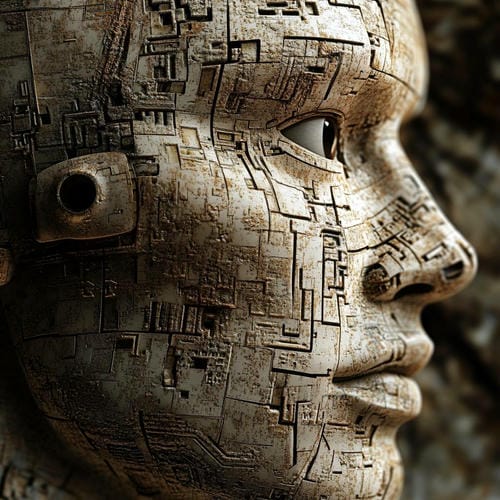
The integration of AI with 3D imaging and photogrammetry has further extended capabilities in artifact reconstruction. Smartphone-based scanning applications coupled with AI-driven photogrammetric processing can generate detailed 3D models of cultural objects and heritage sites, allowing for rapid documentation, comparison with archival records, and even virtual restoration of damaged surfaces. These AI-enhanced digital models serve as “digital twins” of physical artifacts—preserving both their visual appearance and structural details for researchers and the public alike.
AI and Heritage Site Reconstruction
Beyond individual texts and objects, AI is increasingly applied to reconstruct entire heritage sites—both physically destroyed and eroded by time. Cultural heritage projects such as #NEWPALMYRA exemplify this trend: originally sparked by community efforts to model the ancient city of Palmyra from photographic records, the initiative has grown into a collaborative effort to digitally recreate structures destroyed by conflict. By integrating crowd-sourced images and modeling techniques, digital archaeologists produce immersive virtual reconstructions that preserve architectural knowledge even when the physical site no longer stands.
In parallel, generative AI frameworks are being developed to produce detailed 3D reconstructions of heritage buildings using widely available imagery. Innovations like Oitijjo-3D use publicly accessible street-level images as inputs to generate photorealistic and metrically coherent models of historic structures, drastically lowering the cost and expertise required for digital preservation in resource-limited regions. These methodologies democratize heritage reconstruction, enabling local communities and researchers to participate in preserving cultural continuity.
Satellite and aerial imagery analysis powered by AI also plays a crucial role in understanding landscapes that have undergone significant transformation. By training deep learning models on historic satellite datasets such as CORONA imagery, researchers have been able to detect archaeological features that traditional surveys missed, identifying lost sites and informing priorities for protection or excavation. Such automatic detection efforts illustrate how AI can not only reconstruct visible structures but also uncover remnants of human activity long hidden beneath altered topographies.
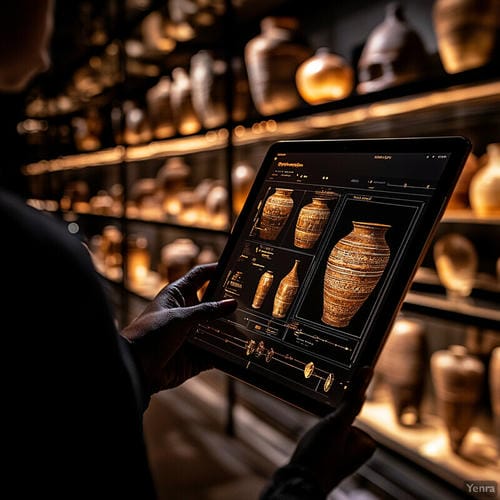
AI’s influence extends into virtual reconstruction for education and outreach. Digital recreations allow students, museum visitors, and remote audiences to explore ancient cities like Pompeii in their original splendor through virtual reality (VR) experiences, fostering deeper connections with the heritage preserved. These experiences bridge gaps between scholarly research and public understanding by translating complex academic reconstructions into immersive narratives.
At the same time, AI assists in monitoring and protection. Machine learning models analyze satellite data and environmental sensors to detect threats to heritage sites—from looting and illicit excavation to natural hazards. By identifying suspicious patterns and emerging risks, these AI systems bolster proactive conservation efforts and support law enforcement in safeguarding cultural property.
Ethical and Interpretive Challenges
Despite the promise of AI in historical reconstruction, significant ethical and methodological challenges persist. Central among these is the risk of speculative interpretation: when AI models generate reconstructions, they inevitably draw on training data that reflects existing biases, assumptions, and gaps in the historical record. Scholars caution that visual reconstructions—particularly those generated for public consumption—must be interpreted carefully, as they can inadvertently propagate misconceptions about past societies and cultural practices. The field of archaeology has long recognized that reconstructive imagery carries inherent interpretive choices, and AI’s ability to produce highly polished visuals heightens the need for transparency about what is evidence-based versus speculative.[3]
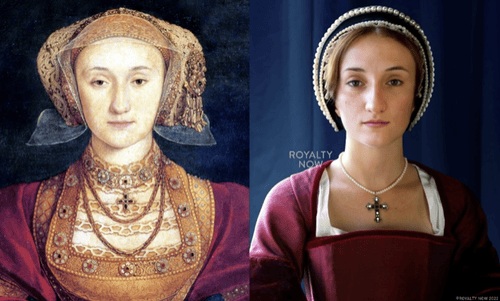
Ethical questions also surround the use of AI in representing intangible heritage—such as oral traditions, cultural narratives, and linguistic diversity. While AI can accelerate preservation by digitizing and translating endangered languages, it also raises concerns about cultural ownership, consent, and the contextual integrity of heritage materials. Ensuring that AI tools respect community-defined meanings and do not inadvertently appropriate or misrepresent cultural knowledge remains a paramount concern.
Finally, there is the broader debate about authenticity versus augmentation. Digital reconstructions can preserve and make accessible otherwise lost heritage, but they cannot replace the material reality of physical artifacts and sites. Scholars and practitioners emphasize that AI should complement, not supplant, traditional methods of conservation and interpretation, reinforcing the role of human expertise in guiding, validating, and contextualizing technological contributions.
Sources:
[1]: https://theaisanctuary.org/ai-heritage
[2]: https://dev.to/rawveg/digital-archaeologists-2me2
[3]: https://www.sapiens.org/archaeology/generativeai-reconstruction-history-heritage-misrepresentations
References:
https://en.wikipedia.org/wiki/Pythia_%28machine_learning%29
https://arxiv.org/abs/2507.13420
Recommended for you: