



Accelerating Concept Validation with AI in Modern Product Development
In today’s fast-paced business environment, the ability to rapidly test and validate product concepts is indispensable. Traditional methodologies for turning a concept into something tangible have typically required extensive time, expertise, and coordination. However, the rise of artificial intelligence (AI) is fundamentally altering this landscape by dramatically reducing the barriers between idea and prototype. Rather than waiting weeks or months for design teams to produce early artifacts, companies can now leverage AI tools to jumpstart concept validation, iterate on design hypotheses, and make data-informed decisions with unprecedented speed. The strategic application of AI throughout the initial phases of product development—not just in design but also in user experience, simulation, and testing—enables businesses to validate core assumptions early in the lifecycle and refine their product direction before committing significant development resources.
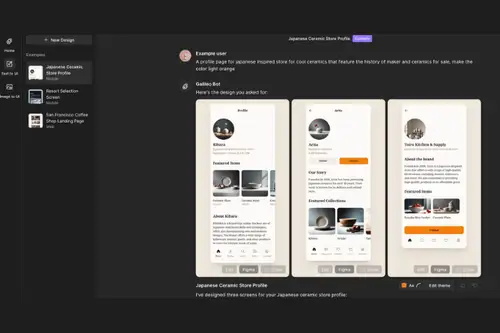
At its core, concept validation is about testing whether a product idea resonates with intended users and solves a real problem. In traditional frameworks, this often involved ideation sessions, manual sketches, wireframes, and early prototypes built from scratch by UX/UI professionals. With AI, much of this groundwork is automated or assisted by machine learning models that interpret natural language, suggestions, and data to generate usable artifacts. Tools such as Galileo AI showcase how simple text prompts can be transformed into high-fidelity UI mockups within seconds, allowing product teams to visualize key user flows without laborious manual drafting.
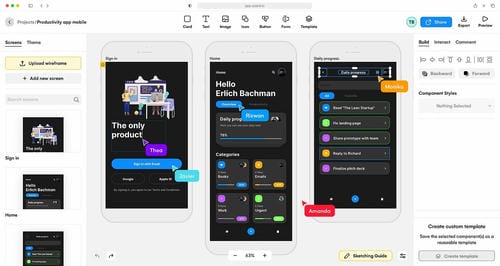
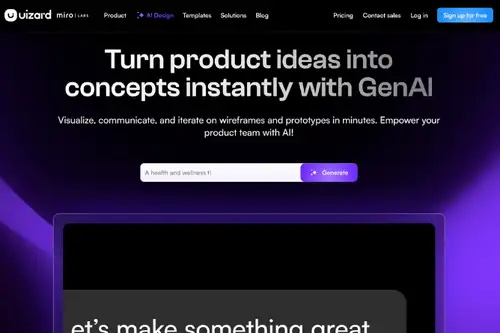
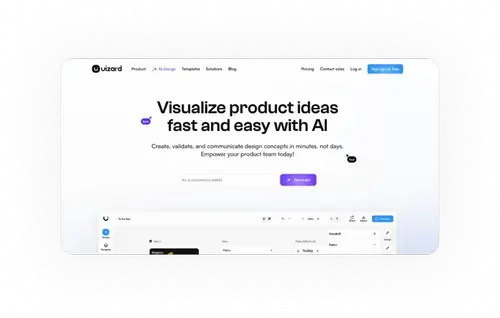
By converting a product brief or feature description into design assets immediately, these AI-driven tools empower cross-functional teams to explore multiple directions rapidly, reducing time to first prototype and enabling early stakeholder feedback without allocating substantial design hours. Similarly, platforms like Uizard demonstrate how AI can take sketches, screenshots, or rough wireframes and convert them into interactive, clickable prototypes. These prototypes are not just static visuals but functional artifacts that can be deployed in user testing scenarios, helping teams understand usability issues and iterate on them long before code is written. The acceleration provided by AI here is not merely incremental; it enables a dramatic compression of early validation cycles, effectively turning days of work into hours. [1]
Beyond visual and interactive prototypes, AI also plays a significant role in idea exploration and refinement. Research in human-computer interaction shows that AI can support dynamic exploration across design stages, allowing designers to revisit, tweak, and experiment with concepts with flexible feedback loops that mirror human thinking. Such systems enable designers to bridge the gap between ideation and actionable prototypes by providing iterative paths that respond to evolving requirements and feedback, making design iteration more fluid and responsive. This adaptability is particularly valuable in early validation, where teams may uncover new insights that require revisiting initial assumptions. By lowering the friction for experimentation, AI fosters a culture of rapid learning and experimentation that aligns with lean startup principles, helping organizations converge on viable product concepts more efficiently.
AI Tools Driving Iteration and Design Refinement
As product development shifts toward a more AI-augmented paradigm, a variety of tools have emerged that specifically target different aspects of prototyping and iteration. These tools empower teams to refine designs continuously, test variations, and incorporate feedback at every stage of development. One prominent example in digital product design is Figma with its AI-powered features such as prototype generators. Figma Make, integrated within the wider Figma ecosystem, allows designers to generate interactive prototypes from natural language prompts, reducing the need for manual wireframing and enabling rapid exploration of alternative design options. This capability not only accelerates early iteration but also enhances collaboration, as stakeholders can weigh in on AI-generated designs with context and visual clarity.
Similarly, platforms like Kittl leverage generative AI to assist with graphic and visual design, providing intuitive workflows and templates that help teams produce professional visuals quickly. These AI-enhanced platforms enable non-designers, such as product managers and business strategists, to contribute directly to the creative process, democratizing design participation and speeding up validation cycles. By removing bottlenecks traditionally associated with design handoffs and reliance on specialized teams, businesses can iterate more comprehensively on product concepts before committing to development budgets or external investments. [4]
The broader trend in AI-based prototyping also includes tools that go beyond UI/UX mockups and target core product functionality and optimization. For instance, AI-powered generative design systems can create multiple alternatives based on engineering constraints, material considerations, and performance goals. These systems run simulations and virtual testing that automatically iterate on designs to satisfy various requirements, helping teams identify optimal configurations before physical prototyping or manufacturing. This approach not only accelerates the refining of design concepts but also reduces resource expenditure on iterative physical prototypes, further accelerating validation cycles for hardware or hybrid products.
Another compelling example comes from AI-assisted workflows in environments such as mobile prototyping. These tools allow developers and designers to construct early prototypes in real mobile contexts, collect user feedback, and refine concepts based on in-field behavior. This contextual feedback loop is crucial for validating assumptions about user interaction, helping teams understand how real users engage with prototypes and what adjustments are necessary to improve usability. The ability to iterate based on direct user insights at the prototype stage ensures that product teams can identify usability issues and refine core concepts well before launch.
Importantly, AI does not merely automate manual tasks; it augments human decision-making by providing predictive analytics, performance insights, and data-driven recommendations. Simulation tools powered by AI enable product managers to model a wide range of scenarios, predict market responses, and stress-test design iterations against performance criteria. This capability transforms tough subjective decisions into data-informed choices, critical for businesses seeking to mitigate risk in early product validation. Such simulations also save costs by reducing dependence on physical prototypes that historically required significant investments of time and capital. [5]
In summary, the incorporation of AI throughout the early stages of product development—from ideation and visualization through interactive prototyping and performance simulation—has redefined concept validation and design iteration. By automating tedious tasks, enabling multi-directional exploration, and providing predictive insights, AI tools offer organizations a powerful means to accelerate experimentation. This shift not only shortens development cycles but also enhances the quality and relevance of validated concepts, ensuring that product teams can innovate with confidence in an increasingly competitive business environment.
Sources:
[1]: https://www.rapidnative.com/blogs/ai-prototyping-tools
[2]: https://www.futurismai.com/solutions/ai-powered-product-design
[3]: https://www.rapidops.com/blog/leveraging-ai-for-product-design
[4]: https://en.wikipedia.org/wiki/Kittl_%28design_platform%29?
[5]: https://arxiv.org/abs/2508.03182
References:
https://procreator.design/blog/top-ai-product-design-tools-teams-must-know
https://uxpin.com/studio/blog/ai-prototyping-tools-ui-ux-designer-technology
Recommended for you: